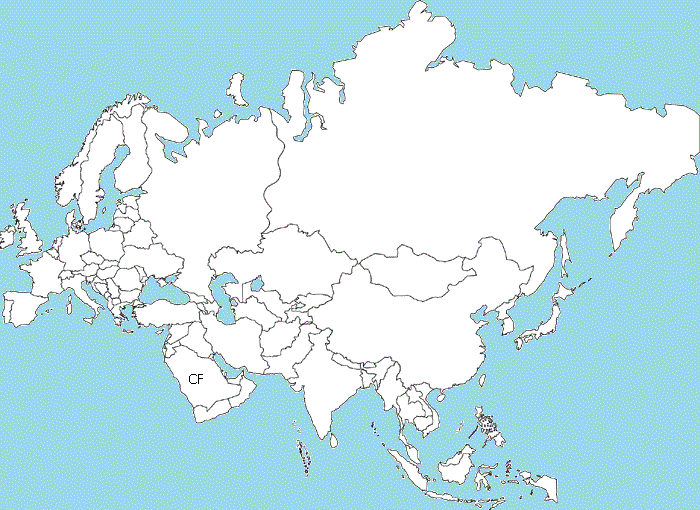
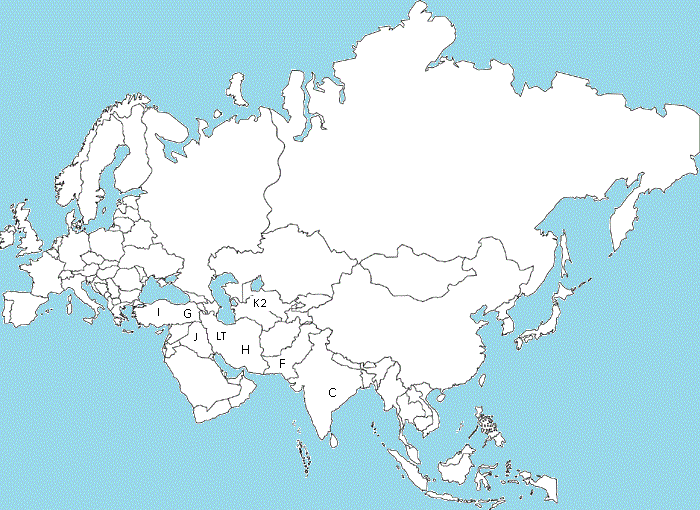
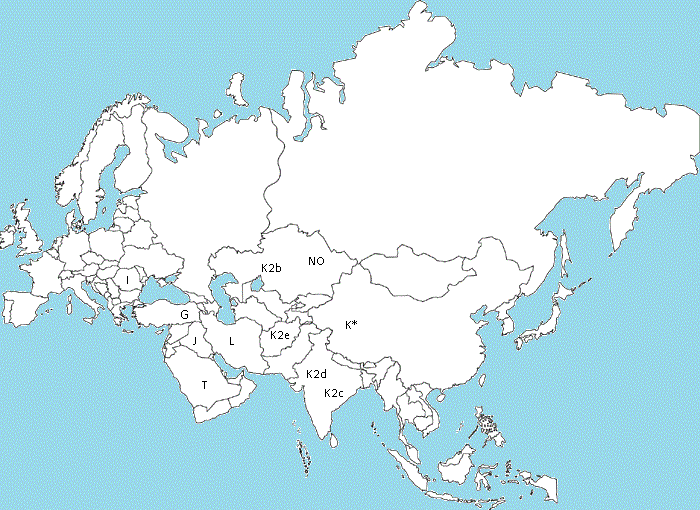
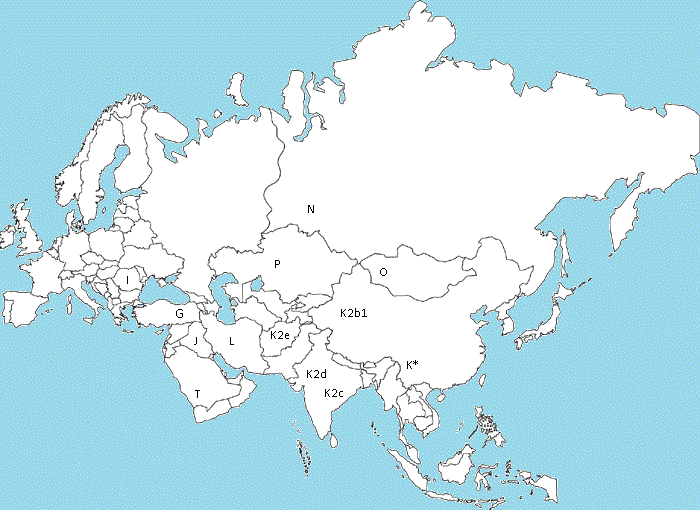
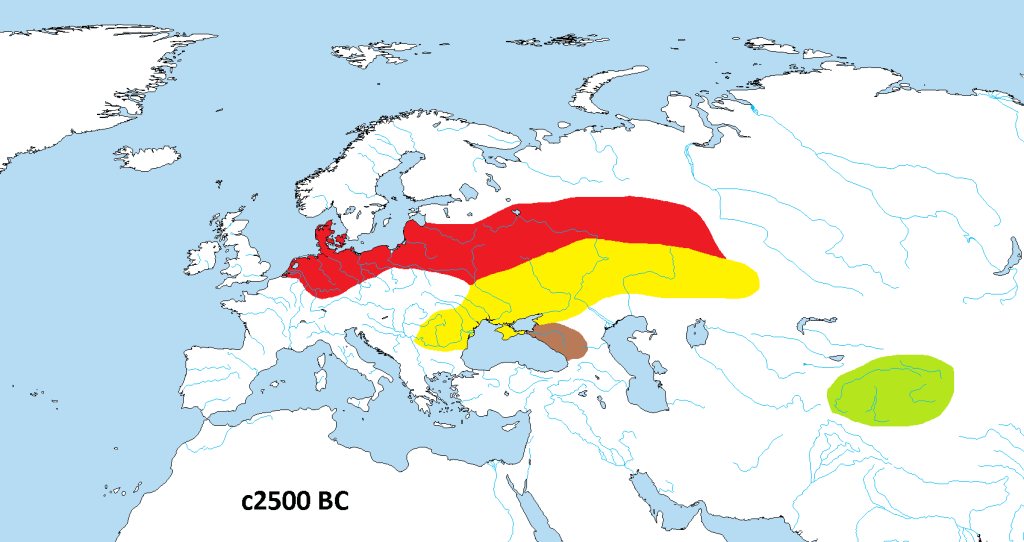
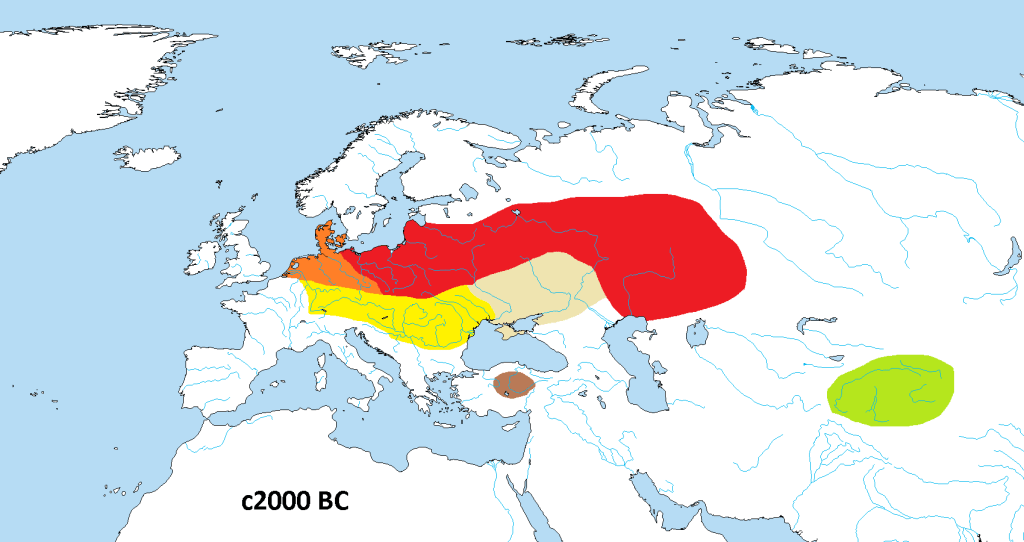
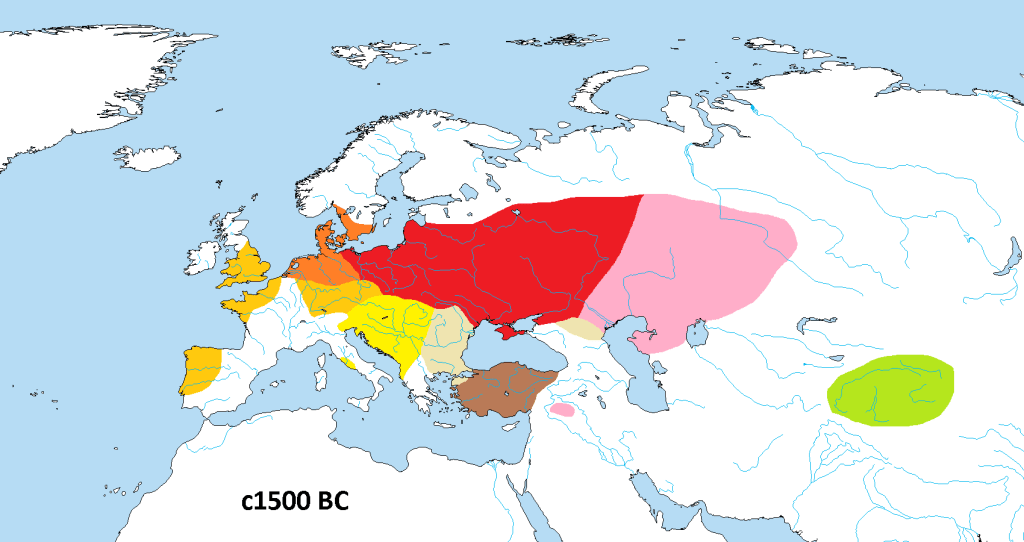
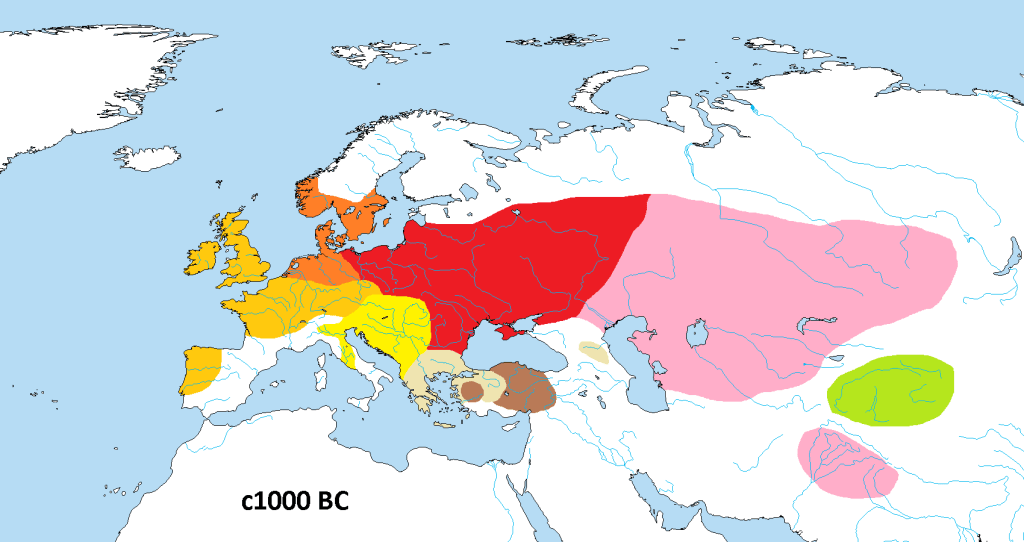
The map above represents the route that my forefathers generally travelled between c5000 BC and c2000 BC. (By “forefathers”, I mean my patrilineal ancestors exclusively.) In terms of successive Y-DNA haplogroups, the following sequence of clades evolved along this route: R1b-P297 > R1b-M269 > R1b-L23 > R1b-L51 > R1b-L151 > R1b-P312 > R1b-L21.
A few years ago, I found out through testing done by 23andMe that my Y-DNA haplogroup is R1b-L21. This haplogroup is sometimes referred to as the “Atlanto-Celtic” haplogroup because it is by far the most common Y-DNA haplogroup among speakers of the modern Insular “Celtic” languages which developed along the Atlantic coasts of western Europe.
As far as I know, the earliest definite culture whose male members belonged to Y-DNA haplogroup R1b is the Samara Culture which flourished in the area of the Samara bend along the Volga River in eastern Russia around 5000 BC. The particular clade of R1b found in this culture is R1b-P297.
Derived from the Samara Culture, the Khvalynsk [c4900 to c3500 BC] and Repin Cultures represent the westwards expansion of the people of my R1b forefathers through the Pontic Steppe. The culmination of this westward expansion was the great Yamnaya Culture [c3300 to c2600 BC] which spanned from the southern Ural Mountains in the east to the Carpathian Mountains in the west. The prevailing Y-DNA haplogroups in the Khvalynsk, Repin and Yamnaya Cultures were R1b-M269 and R1b-L23.
Further westward expansions from the Pontic Steppe during the first half of the third millenium BC brought my Yamnaya forefathers up the Danube River valley into central Europe. By the middle of the third millennium BC, the people of my R1b forefathers encountered the people of the Corded Ware Culture in what is now southern Germany. By this time, the R1b-L51 clade had appeared.
As the people of my R1b ancestors expanded westwards across the Pontic Steppe, their R1a relatives also expanded westwards through the forested zone immediately north of the steppes (through what are now the Russian heartland and Belarus). Arriving in central Europe via what is now Poland, they were at least partly responsible for the appearance of the Corded Ware Culture [c2900 to c2350 BC]. This culture and its derivatives (Middle Dnieper, Fatyanovo-Balanovo) quickly expanded eastwards among the R1a folks, ultimately contributing to the appearance of the Abashevo Culture [c2500 to c1900] in the region of the Volga River which in turn contributed to the development of the Sintashta Culture (Indo-Iranians) and the Srubnaya Culture (Cimmerians).
Largely contemporaneous with the Corded Ware Culture was the somewhat-enigmatic Bell Beaker Culture [c2800 to c2300 BC]. The origins of this culture are disputed – it may have originated in Iberia – but it extended over most of western Europe and much of central Europe, overlapping considerably with the Corded Ware Culture in central Europe.
When the people of my R1b forefathers moved up the Danube River valley into central Europe towards the middle of the third millennium BC, they seemingly adopted the Bell Beaker Culture. Some of these Bell Beaker R1b-L51 folks subsequently expanded further northwards and mixed with the R1a people of the Corded Ware Culture in north-central Europe, thereby forming the basis of the Germanic peoples (among whom the R1b-U106 clade eventually developed).
[July 10, 2026: I no longer believe in this theory for the ethnogenesis of the Germanic peoples. I now believe that the Germanic peoples resulted from a group of Yamnaya folks (R1b) migrating through western Ukraine and Poland to the north of the Carpathians up to northern Germany, picking up a significant contingent of Corded Ware folks (R1a) along the way. This would have happened sometime in the second half of the third millennium BC. See further below for other changes in my present views.]
The R1b-P312 clade eventually developed among the Bell Beaker R1b-L51 folk who remained in central Europe. Some of these R1b-P312 folks subsequently migrated with the Beaker Culture into northwestern Europe (the Low Countries, northern France, Great Britain, Ireland). Soon thereafter, the R1b-L21 subclade appeared among these R1b-P312 folk of northwestern Europe. Meanwhile, the R1b-U152 subclade appeared among the central European R1b-P312 folk, as well as the Unetice Culture [c2300 to c1600].
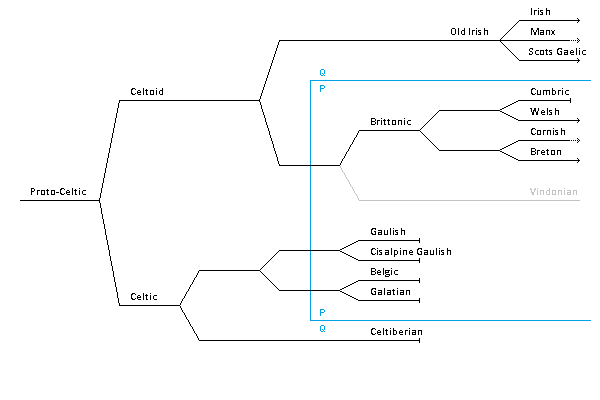
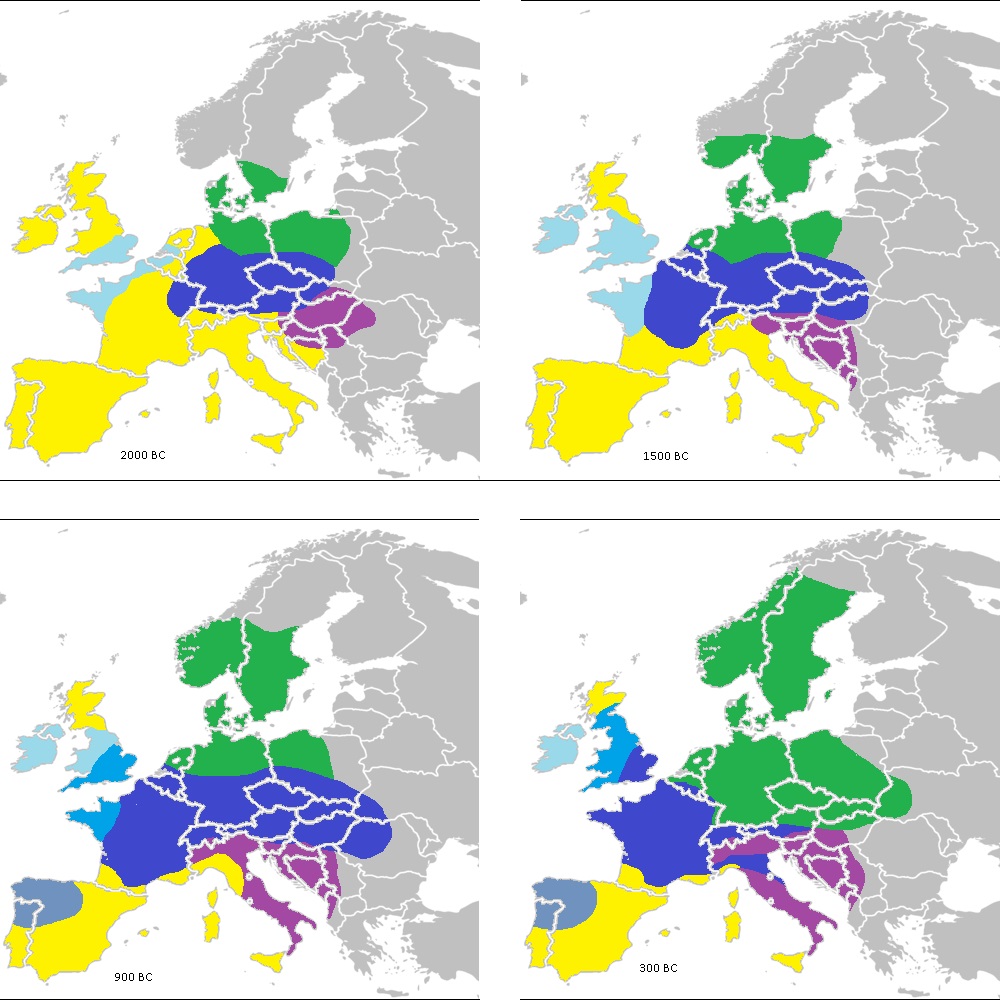
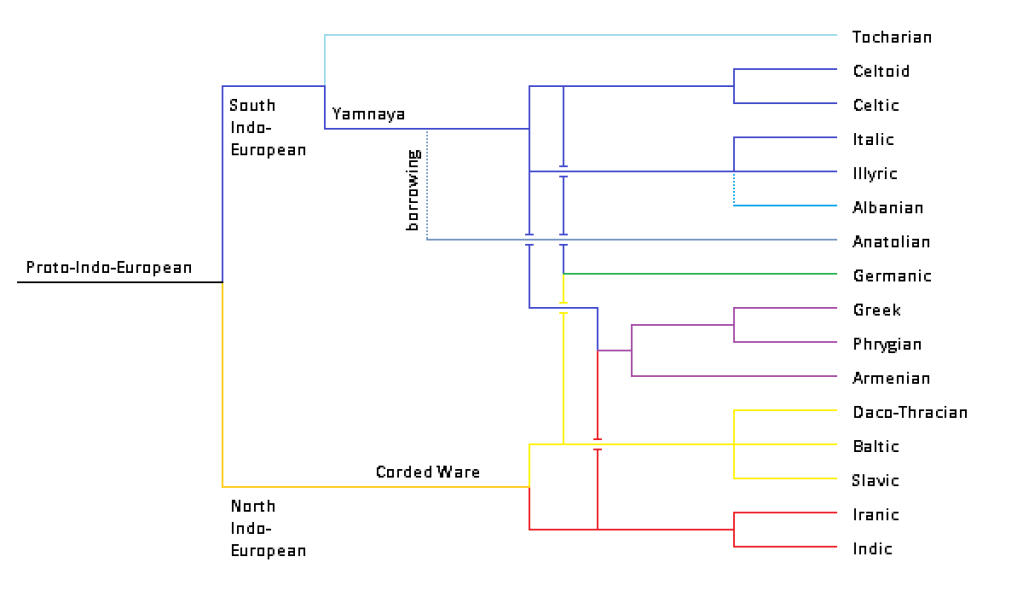
It is my view that the separation between “Celtic” and “Celtoid” that I wrote about in my article “Celtic and Celtoid” – https://vellaunos.ca/2021/03/26/celtic-and-celtoid/ – coincides with the separation between the two major subclades of R1b-P312, namely R1b-U152 (“Celtic”) and R1b-L21 (“Celtoid”). In this view, the successive cultures in Central Europe from the Unetice Culture onwards – including the Tumulus Culture [c1600 to c1200 BC], the Urnfield Culture [c1300 to c750 BC], the Hallstatt Culture [c800 to c450 BC] and the La Tène Culture [c450 BC to Roman conquests] – were all Celtic cultures, while the Celtoid peoples were part of the distinctly separate Atlantic Bronze Age [c1300 to c700 BC].
[July 10, 2026: I now tend to think that the Unetice Culture may have been the original Proto-Germanic culture, and that the original Proto-Celtic culture was the Danubian Early Bronze Age complex directly to the south of it. The Danubian EBA eventually became the Tumulus Culture which expanded northwards, pushing the Unetice Proto-Germanic folks northwards (Early Nordic Bronze Age). Meanwhile, the Proto-Baltic Mierzanowice Culture became the Trzciniec Culture which became the Lusatian Culture…]
(R1b-U152 is said to be “Italo-Celtic” but I am calling it “Celtic” with respect to the cultures of central Europe because of my opinion that the Italic peoples were established quite apart from the central European Celts in an area including Hungary, Croatia and northern Serbia, from where they eventually migrated into Italy.)
After migrating westwards through the Pontic Steppe from eastern Russia, and migrating up the Danube River valley into central Europe, my forefathers finally migrated into northwestern Europe somewhere around 2000 BC and they remained in this region for over three and a half millennia, until one of them decided to venture out over the ocean and settle in a new world…
By the way, here’s a very good web page about Haplogroup R1b: https://www.eupedia.com/europe/Haplogroup_R1b_Y-DNA.shtml
And here’s a remarkable “Prehistory Atlas” showing the movements and distributions of various cultures in the Old World throughout prehistory up to the Middle Ages: https://indo-european.eu/maps/
(By clicking on each map on the main page, you arrive on the page for that particular time period on which you can access the full map as well as maps showing the location of sites where Y-DNA and mtDna have been identified.)